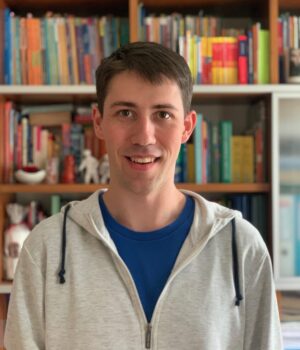
Inaugural lecture Robert Ahrends

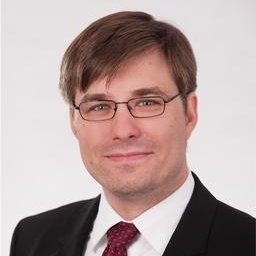
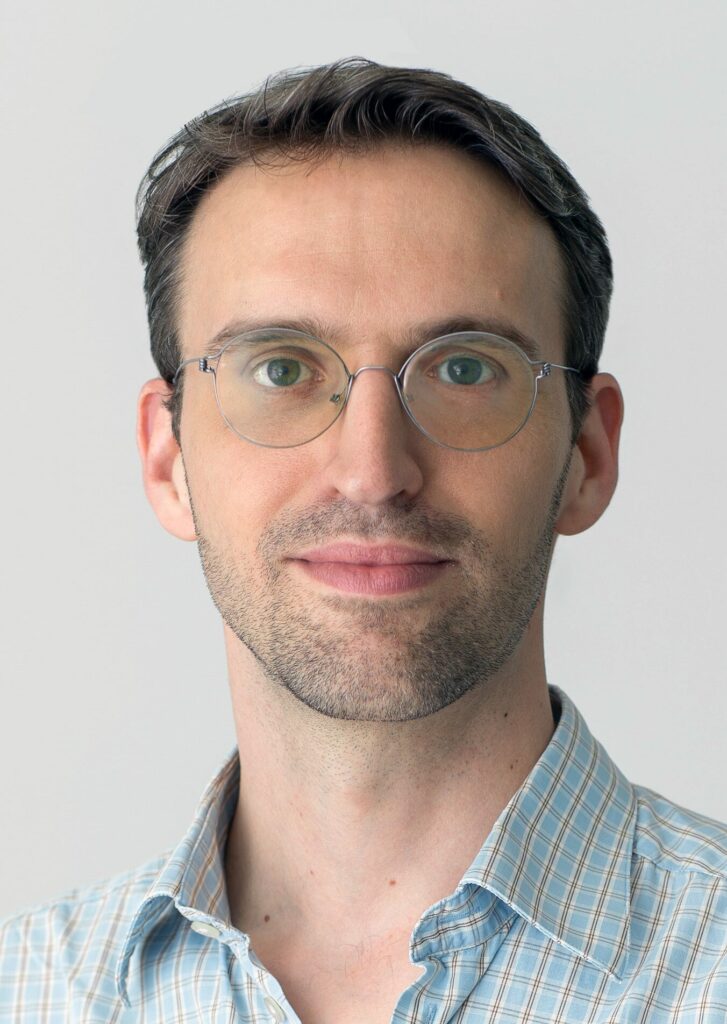
The inaugural lecture von Prof. Robert Ahrends will take place on 29. April 2026 at 4pm in the University Main Bulding.

Robert Ahrends is professor of Computational Mass Spectrometry at the Institute of Analytical Chemistry, Faculty of Chemistry.

He trained in biochemistry and analytical chemistry at the Justus Liebig University Giessen and already during his diploma studies focused on quantitative biology and chemical systems analysis. With an IKB PhD stipend, he expanded this analytical and chemistry-driven focus by developing quantitative proteomics strategies based on metal-tagging and elemental mass spectrometry at the Humboldt University, Berlin. These approaches leveraged coordination chemistry and isotopic encoding for multiplexed, high-dimensional protein quantification. The resulting technologies were protected through national and international patents and established new standards for quantitative single-cell proteomics. Through this work and his time at Agilent Technologies, he identified fundamental limitations in conventional mass spectrometry: not only in throughput and sensitivity, but in the absence of scalable computational frameworks capable of translating high-dimensional mass spectrometric data into biological insight.

To address these challenges, he joined the Department of Chemical and Systems Biology at Stanford University. By integrating quantitative analytical workflows, isotope-labeled standards, and datadriven computational modeling, he revealed that fat cell differentiation is a noise-dependent, multi-feedback process that becomes irreversibly locked once a critical threshold is crossed. This work demonstrated how computational modeling of high-dimensional mass spectrometry data can uncover nonlinear biological decision processes that remain invisible to purely experimental analysis.

He subsequently established an independent research program at the Institute for Analytical Sciences in Dortmund, focusing on quantitative and computationally driven lipidomics. Since October 2023, he is Full Professor of Computational Mass Spectrometry at the University of Vienna.

Research areas

His research aims to transform mass spectrometry into a quantitative, computational platform for lipidomics and systems-level analysis of cellular chemistry. He and his team established Lipidomics Informatics for Life Sciences (LIFS), a computational infrastructure that systematically maps lipid chemical space and enables scalable interpretation of large-scale lipidomics datasets. The group develops integrated analytical and computational strategies to study lipid–lipid interactions, enzymatic lipid remodeling, and the dynamic role of lipids in membrane organization and signaling. The long-term goal is to establish quantitative, computation-enabled chemical frameworks that make complex cellular communication measurable and predictive, and to identify novel molecular targets for therapeutic intervention, particularly in cardiometabolic disorders. “Our research aims to quantitatively decode the complex relation of lipids and translate this chemical space into new strategies for understanding and treating lipid-related diseases”

More infos:

https://chemie.univie.ac.at/en/knowledge-exchange/talks-events/inaugural-lecture-robert-ahrends/

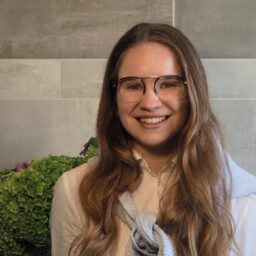
Milena Schuhmacher More than fat – Tracking the secret life of lipids

On April 16, 2026 the institute seminar will take place:

16.04.2026 / 13:00/ HS2
Milena Schuhmacher
École Polytechnique Fédérale de Lausanne, Switzerland 

“More than fat – Tracking the secret life of lipids ”

Milena Schuhmacher is a researcher at the École Polytechnique Fédérale de Lausanne in Switzerland, where she works in the field of chemical and membrane biology. She is part of the Schuhmacher Lab, focusing on the role of lipids in cellular processes and signaling.
Her research uses chemical biology approaches to better understand how lipid diversity affects cell function.

Milena Schuhmacher is also involved in teaching and supervises PhD students at EPFL.

In addition, she has received recognition such as a European Research Council Starting Grant for her innovative research projects.

Thilo Hofmann Nanogeosciences, Nanotechnology and Nanoplastics: Similarities and Lessons Learned

On Dec 18, 2025, the institute seminar will take place:

Dec 18, 2025 / 12:30 / HS2
Prof. Thilo Hofmann
University of Vienna

“Nanogeosciences, Nanotechnology and Nanoplastics: Similarities and Lessons Learned”

Thilo Hofmann is Professor of Environmental Geosciences at the University of Vienna, where he has held a full professorship since 2005. He earned his PhD in aquatic geochemistry from the University of Bremen in 1998, followed by postdoctoral and assistant professor positions at the University of Mainz. His research explores the environmental impacts of nanotechnology, the behaviour of trace contaminants, sorption processes involving carbonaceous materials, and the fate of microplastics in the environment.He directs the University of Vienna’s Environmental and Climate Research Hub, which brings together over 70 research groups across the natural sciences, social sciences, humanities, law, and economics to address holistically today’s pressing environmental challenges. He has published more than 260 peer-reviewed papers and received awards from the German Academic Scholarship Foundation, TU Berlin (the Erwin Stephan Prize), and the German Water Chemistry Society. He holds adjunct and guest professorships at Duke University (USA) and Nankai University, Tianjin (China).

Thesis defence

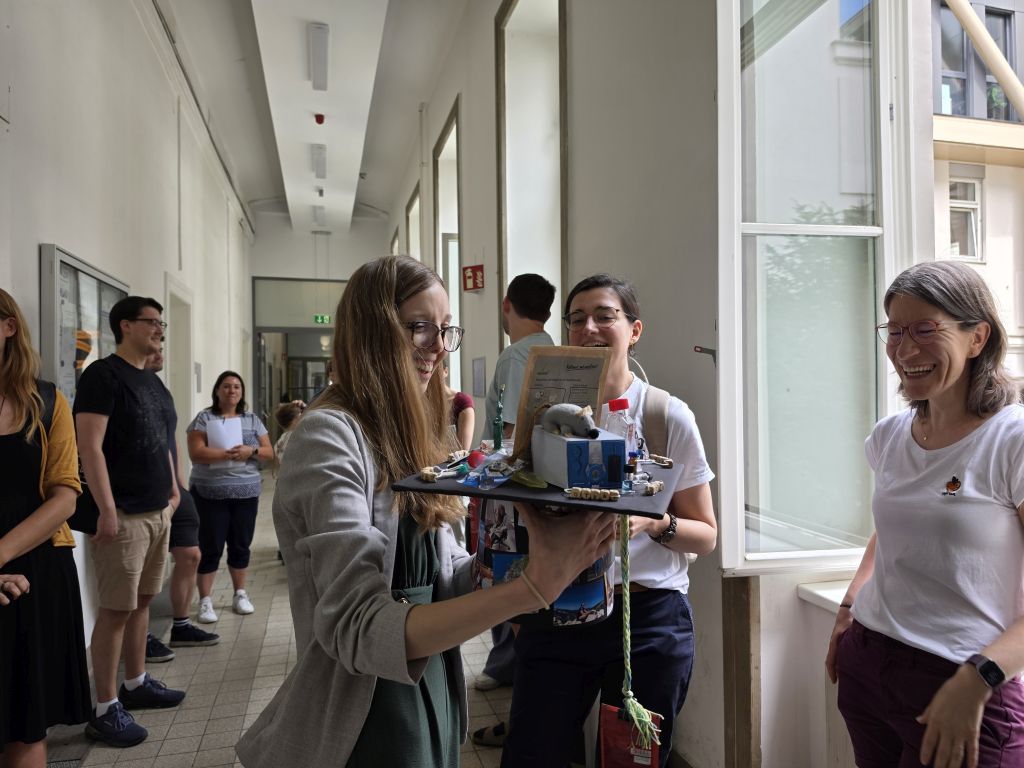
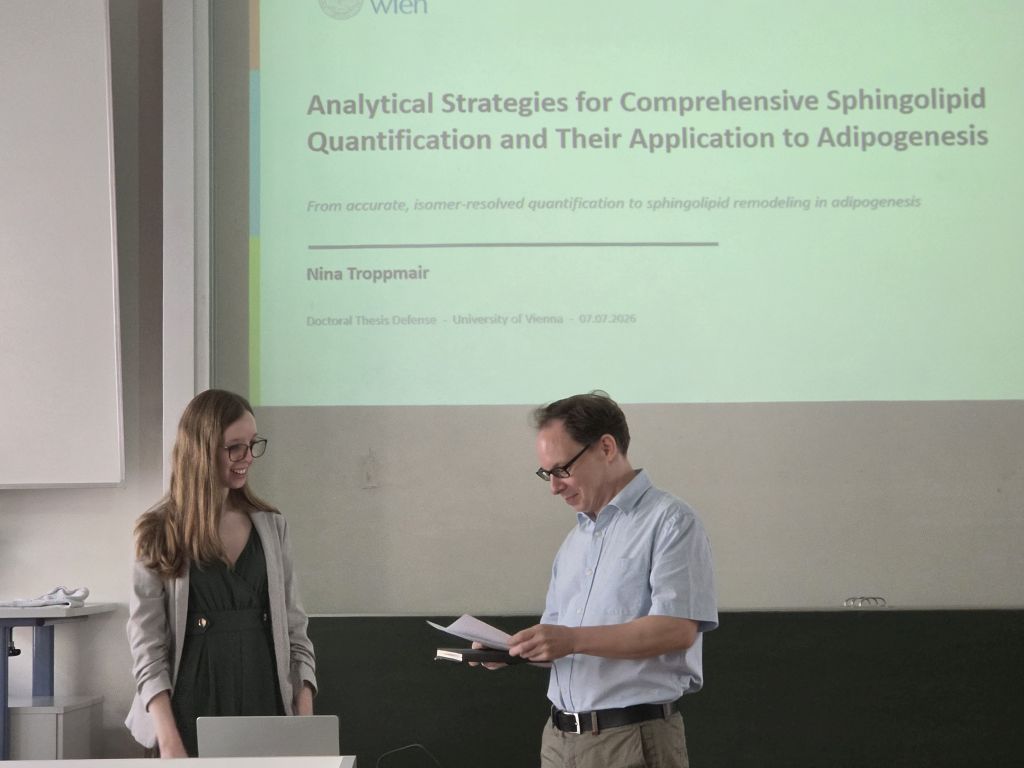
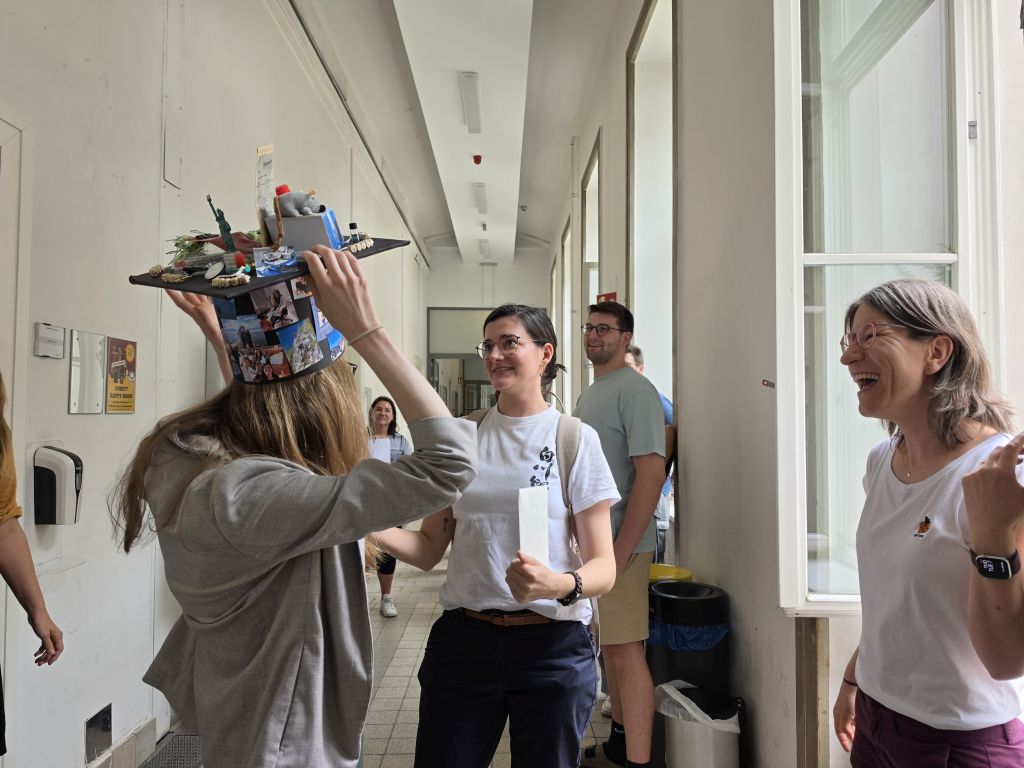
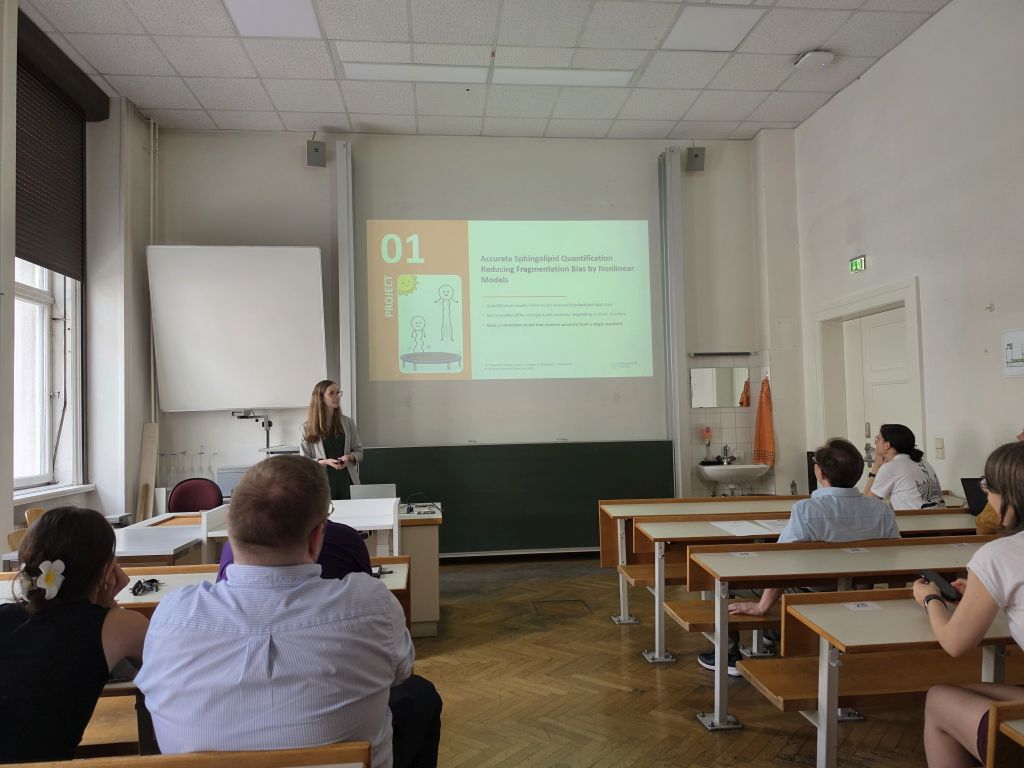
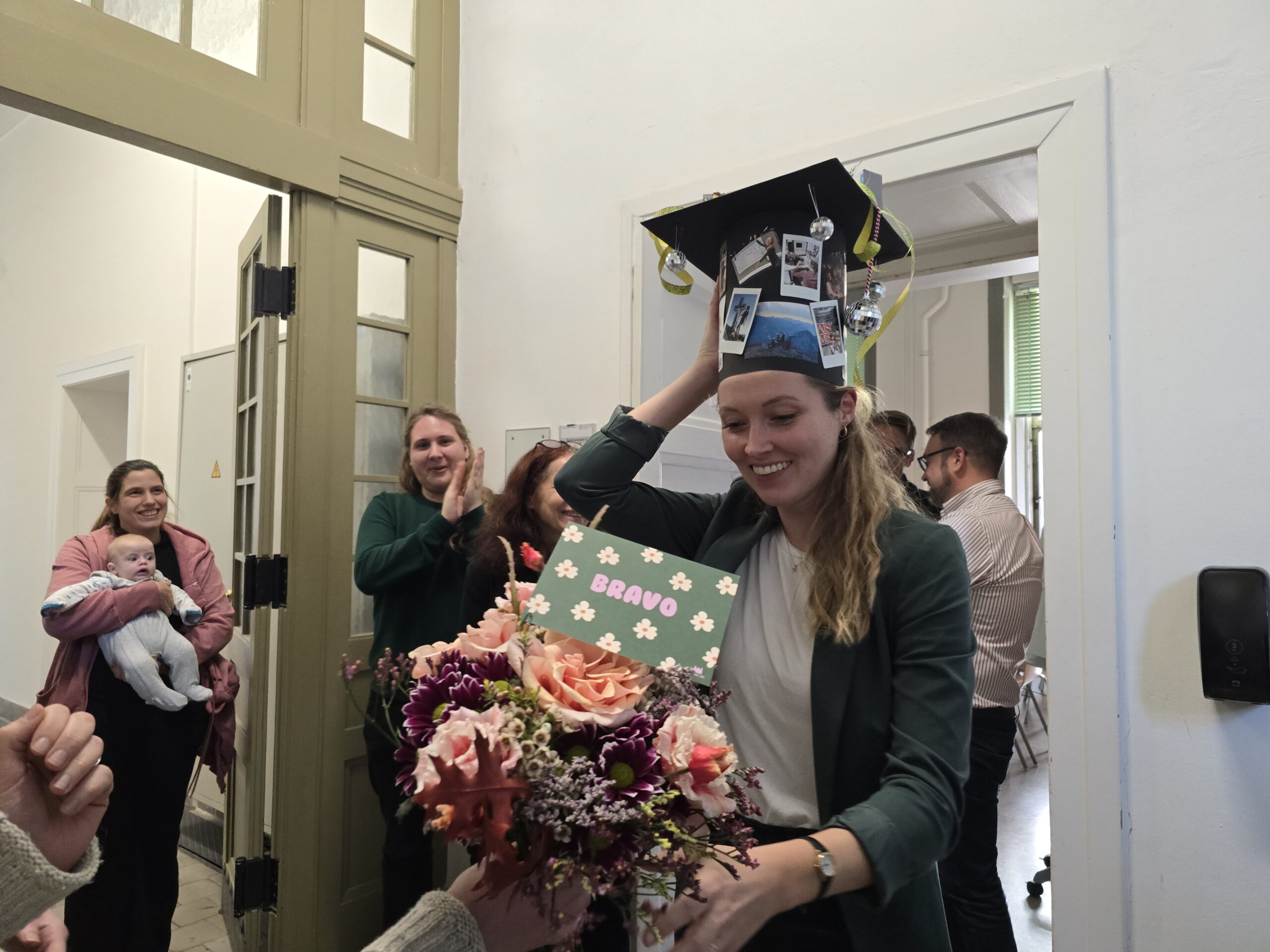
The defense of Bianca de Jonckheere took place on Tuesday, 18 November 2025 at 1 pm in Seminar Room 2.

The examination committee consisted of Robert Ahrends, Marc Pignitter, and Andreas Koeberle (online), with Astrid Slany serving as chair.

The deferense proceeded smoothly and successfully.

Congratulations to Bianca on this excellent achievement!

Review: Lipidomics Forum 2025

From 14–17 September 2025, the 10th Lipidomics Forum took place at the University of Vienna. Over four days, international researchers, early-career scientists, and industry partners gathered to discuss the latest advances in lipid research.

The program featured workshops, keynote lectures, poster sessions, and networking opportunities, covering a wide range of topics – from cutting-edge mass spectrometry to lipid signaling, membrane biology, neurolipidomics, and oxylipin analytics.

Highlights included inspiring keynote talks by Kirsten Sandvig, Tore Skotland, Judith Simcox, Christer Stenby Ejsing, Josef Ecker, Andreas Koeberle, Nathan Hatcher, Kim Ekroos, Nils H. Schebb, Craig Wheelock, and Monther Abu-Remaileh. Numerous poster presentations and short talks by young scientists fostered lively exchange and showcased the diversity and dynamism of the field.

With more than 113 participants, the forum was a great success and provided a valuable platform for advancing scientific innovation and initiating new collaborations. We extend our sincere thanks to all speakers, participants, sponsors, and organizers who contributed to the success of this anniversary edition.

The next Lipidomics Forum will take place in 2026 in Germany – we already look forward to seeing you there!

Ruth Birner-Grünberger

On May 15, 2025, the institute seminar will take place:

May 15, 2025 / 13:00 / HS2
Prof. Ruth Birner-Grünberger
TU  Wien

“Functional proteomics of lung cancer reveals metabolic adaptations leveraging oxidative stress defence and limitation of advanced glycation end product formation”

Prof. Ruth Birner-Grünberger is a renowned biochemist and has been a full professor for Bioanalytics at the Institute of Chemical Technologies and Analytics at TU Wien since July 2019.
She studied Technical Chemistry at TU Graz and the Royal Melbourne Institute of Technology (RMIT) in Australia, and earned her PhD at TU Graz in the field of mitochondrial lipid biochemistry.

Her research focuses on the interface of bioanalytics, biochemistry, and cell biology, particularly in the areas of proteomics, lipid metabolism, and cancer metabolism.
Before joining TU Wien, she led the Core Facility for Mass Spectrometry at the Medical University of Graz and was also an associate professor there.

In addition, she actively participates in scientific societies, having served as president of the Austrian Proteomics and Metabolomics Association (2015–2019) and as a member of the General Council of the Human Proteome Organization (HUPO) since 2017.

Georg Ramer & Margaux Petay Super-resolution chemical imaging

On April 3, 2025, the institute seminar will take place:

April 3, 2025 / 12:00 / HS2
Georg Ramer & Margaux Petay
TU  Wien

“Super-resolution chemical imaging: the power of photothermal IR spectroscopy”

Prof. Dr. Georg Ramer is an Assistant Professor at the Institute of Chemical Technologies and Analytics at TU Wien, specializing in vibrational spectroscopy, infrared spectroscopy, and nanoscale imaging.


Dr. Margaux Petay is a Postdoctoral Researcher at the same institute, focusing on advanced infrared nanospectroscopy techniques. Both are scheduled to present a lecture titled “Super-resolution chemical imaging: the power of photothermal IR spectroscopy” on April 3, 2025, at the University of Vienna.

Margaux Petay

Markus Hartl Advancing proteomics step-by-step

On January 23, 2025, the institute seminar will take place:

January 23, 2025 / 12:00 / HS2
Markus Hartl 
Max Perutz Labs Vienna

“Advancing proteomics step-by-step”

Dr. Markus Hartl is a biologist specialized on LC-MS based proteomics and currently the head of the Mass Spectrometry Facility at Max Perutz Labs, Vienna.

Driven by a keen interest in all living things he studied Ecology and Ecological Biochemistry at the University of Vienna, followed by a PhD thesis at the Max Planck Institute for Chemical Ecology in Jena, Germany, where he discovered his passion for proteins and proteomics. As a postdoc he joined the lab of Dr. Iris Finkemeier at the LMU Munich, where he optimized the methodology for deep quantitative acetylome profiling in collaboration with the lab of Dr. Matthias Mann. 

In 2014, he was appointed as head of the Max Perutz Labs Mass Spectrometry Facility. He and his team provide comprehensive proteomics services to both internal research groups at the Perutz and external clients, including academic institutions and companies in Vienna and beyond. His research centers on optimizing proteomics workflows and on developing innovative methods to address complex biological challenges. Additionally, he is a member of the FWF SFB F70 project, focused on “HDACs as regulators of T cell-mediated immunity in health and disease”, where he contributes to advancing our understanding of the intricate regulation of T-cell mediated immunity and how it can be modulated through HDAC activity.

Boryana Petrova “Leveraging Metabolomics to Charakterize Embryonic CSF During Inflammation”

On January 16, 2025, the institute seminar will take place:

January 16, 2025 / 12:00 / HS2
Boryana Petrova
Medical University of Vienna
“Leveraging Metabolomics to Characterize Embryonic CSF During Inflammation”

Dr. Petrova is a broadly trained molecular biologist with extensive expertise in LCMS and metabolomics. Her dedication has enabled her to thrive as a metabolomics expert at prestigious institutions such as MIT and Harvard Medical School (HMS). As a postdoc at MIT, research on Drosophila oogenesis and Toxoplasma gondii drug resistance sparked her interest in metabolomics and LCMS. At Boston Children’s Hospital and HMS, as a staff scientist, she established the metabolomics mass spectrometry facility for the lab of Dr. N. Kanarek, overseeing daily operations and personnel, method development, and data analysis. Her extensive collaborations and independent research have applied metabolomics to various biological inquiries, including cancer, neuroinflammation, developmental biology and more, both in basic and clinically relevant settings. As an instructor at HMS, Dr. Petrova further focused on mentoring colleagues and students and has developed graduate-level courses on cancer metabolism and LCMS. Her commitment to teaching is further demonstrated by her roles as a lecturer at Northeastern University and the Cambridge Centre for International Research. Dr. Petrova has recently assumed the position of Director of the Research Metabolomics Core Facility at Medical University of Vienna. In this role, she aims to drive innovation in metabolomics, support collaborative research efforts, and pursue independent research initiatives.

Josef Ecker “The Gut-Liver Connection: How The Gut Microbiota Regulates Host Lipid Metabolism”

Prof. Dr. Josef Ecker, born in 1978, is a distinguished biologist specializing in lipid metabolism and its implications for health and disease. He completed his biology studies at the University of Regensburg, earning his doctorate in 2007. Following his Ph.D., he conducted research at the University of California, Berkeley, focusing on lipid metabolism.

Currently, Prof. Ecker leads the Functional Lipidomics and Metabolism Research group at the Institute of Clinical Chemistry and Laboratory Medicine, University Hospital Regensburg. His research centers on the interplay between dietary fats, gut microbiota, and systemic lipid metabolism, particularly concerning intestinal lipid absorption and its role in diseases such as cancer.

In addition to his role in Regensburg, Prof. Ecker is a principal investigator in the Collaborative Research Center (CRC) 1371 at the Technical University of Munich (TUM). Within this consortium, he co-leads Project P13, which investigates the impact of dietary fat and gut microbiota interactions on intestinal lipid absorption, systemic lipid metabolism, and intestinal cancer.

Prof. Ecker has an extensive publication record, with his work being cited over 3,500 times, reflecting his significant contributions to the field of lipidomics.

His research aims to elucidate the molecular mechanisms underlying lipid metabolism and its influence on health, providing insights that could lead to novel therapeutic strategies for metabolic diseases and cancer. Many thanks, Josef, for your great presentation!

Lipidomics
Privacy Overview

This website uses cookies so that we can provide you with the best user experience possible. Cookie information is stored in your browser and performs functions such as recognising you when you return to our website and helping our team to understand which sections of the website you find most interesting and useful.